Learn more about national concrete standards from the American Concrete Institute (ACI). If you live in the Red River Valley, you know the routine. The weather forecast predicts a “Alberta Clipper,” and by morning, you are staring at three feet of heavy, drifted snow blocking your garage. The wind chill is -30°F. Your snowblower won’t start. And you have a meeting in 45 minutes.
For decades, this struggle has been a mandatory part of life in Fargo, North Dakota. But for a growing number of homeowners, the morning snow battle is a thing of the past.
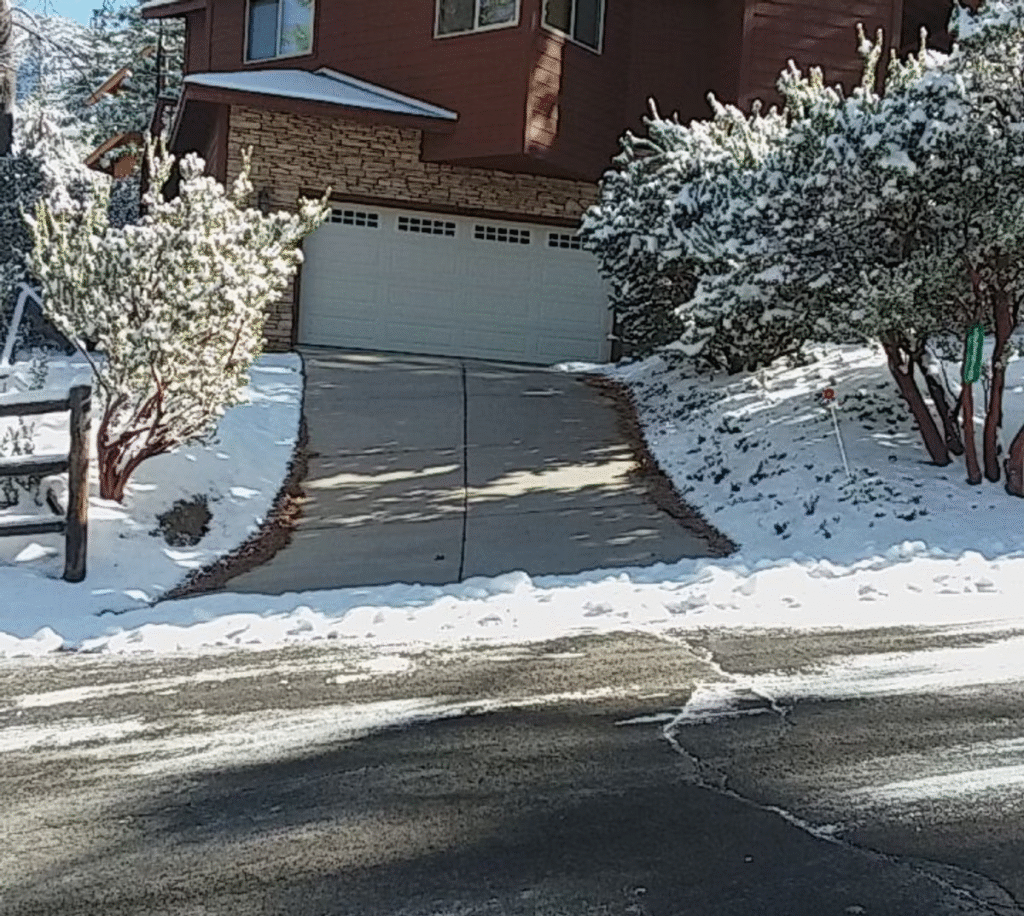
Imagine waking up after a blizzard to a driveway that is clear, dry, and safe—without lifting a shovel.
This is the reality of heated stamped concrete driveways.
At Solid State Concrete, your driveway should be more than just a place to park your car; it should be a functional asset that improves your quality of life. In this comprehensive guide, we will explore everything you need to know about heated driveways: how they work, why they are the perfect match for decorative stamped concrete, and whether the investment makes sense for your Fargo home.
Part 1: What Exactly is a Heated Stamped Concrete Driveway?
The “Heated” Part: Radiant Snow Melting
Unlike traditional heating methods that blow hot air into a space, a heated driveway uses radiant heat. This technology warms the mass of the concrete slab itself, turning the entire driveway into a gentle heating element.
Because concrete is a dense material, it holds heat exceptionally well. When the system is active, it raises the surface temperature of the concrete just enough—usually to around 38°F to 40°F—to melt snow as it lands and prevent ice from bonding to the surface.
The “Stamped” Part: Decorative Artistry
Historically, heated driveways were purely utilitarian—often just plain, grey slabs. But today, homeowners demand curb appeal. Stamped concrete involves pressing heavy rubber mats into the wet concrete to simulate the texture and shape of high-end materials like:
Slate
Flagstone
Brick
Weathered Wood
Cobblestone
The result is a driveway that looks like a luxury stone installation but performs like a high-tech machine.
Part 2: Hydronic vs. Electric Systems – Which is Right for Fargo?
When planning a heated driveway in North Dakota, you generally have two system options: Hydronic (liquid-based) or Electric (wire-based). Understanding the difference is critical for our climate.
1. Hydronic Systems (The Fargo Standard)
Hydronic systems are the most common choice for large driveways in cold climates.
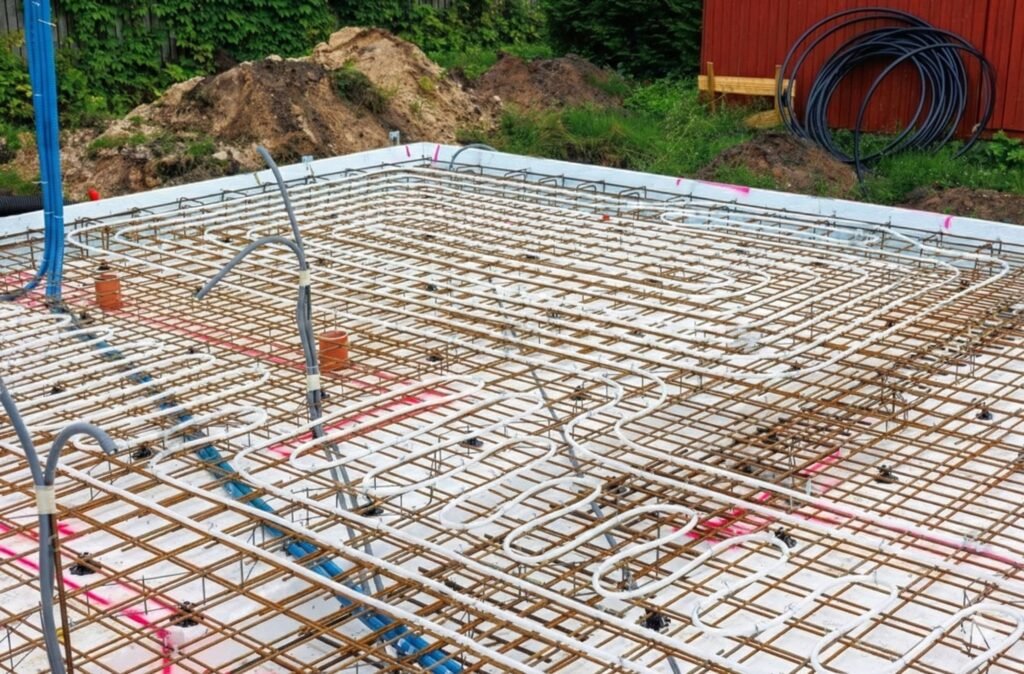
How it works: We install a network of flexible, durable PEX (cross-linked polyethylene) tubing within the concrete slab. This tubing circulates a mixture of hot water and propylene glycol (anti-freeze). The fluid is heated by a boiler located in your garage or mechanical room.
The Pros:
Lower Operating Cost: Generally cheaper to run day-to-day than electric, especially for large areas.
Durability: PEX tubing is incredibly tough and resistant to crushing.
Power Source: Can run on natural gas, which is often more cost-effective in ND than electricity for high-load heating.
The Cons: Higher upfront installation cost due to the need for a boiler, pumps, and manifolds.
2. Electric Systems
Electric systems use resistance cables (similar to heated bathroom floors) embedded in the concrete.
How it works: Electric cables generate heat when current flows through them. They are wired directly into your home’s electrical panel.
The Pros: Lower upfront installation cost (no boiler needed), fewer moving parts, and silent operation.
The Cons:
High Operating Cost: In extreme cold, heating a large driveway with electricity can be very expensive.
Capacity Limits: A large driveway might require a significant upgrade to your home’s electrical service panel (e.g., upgrading to 400 amps) to handle the load.
Our Verdict for Fargo: For small walkways or front stoops, electric is fine. For a full 2-car or 3-car driveway in North Dakota, Hydronic is almost always the superior choice for long-term efficiency and power.
Part 3: The "Secret" Benefit: Why Heat Protects Your Concrete
Most people buy heated driveways for convenience. But as concrete contractors, we love them for a different reason: Longevity.
Fargo’s climate is brutal on concrete for two reasons: Freeze-Thaw Cycles and Chemical Damage. A heated system solves both.
The Problem with Freeze-Thaw
Concrete is porous. In spring and fall, water seeps into those tiny pores. When the temperature drops below freezing at night, that water expands by 9%, creating internal pressure that cracks and flakes (spalls) the surface.
The Solution: A heated driveway evaporates moisture. By keeping the slab dry and maintaining a steady temperature during storms, it drastically reduces the number of freeze-thaw shocks the concrete endures.
The Problem with Salt
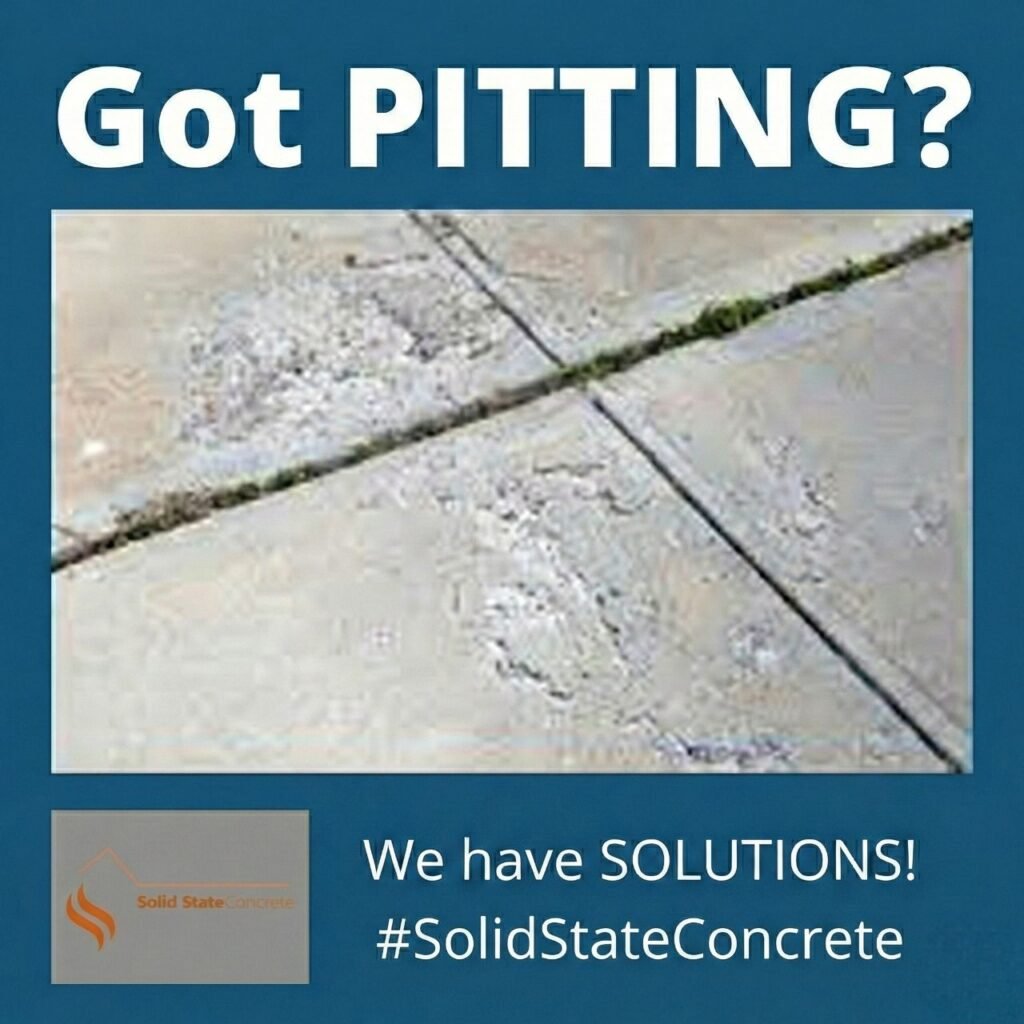
We salt our roads and driveways to melt ice. But salt is corrosive. It attacks the chemical bonds in the concrete paste, leading to pitting and crumbling.
The Solution: With a heated driveway, you never need to buy salt again. You eliminate the #1 enemy of concrete from your property entirely. This is why heated slabs often look pristine 20 years later, while their non-heated neighbors are pitted and cracked.
Part 4: Designing Your Dream Driveway
Just because it’s functional doesn’t mean it has to be boring. At Solid State Concrete, we specialize in high-end decorative finishes. Here are the top design trends we are seeing for 2026:
1. The Seamless Slate Look
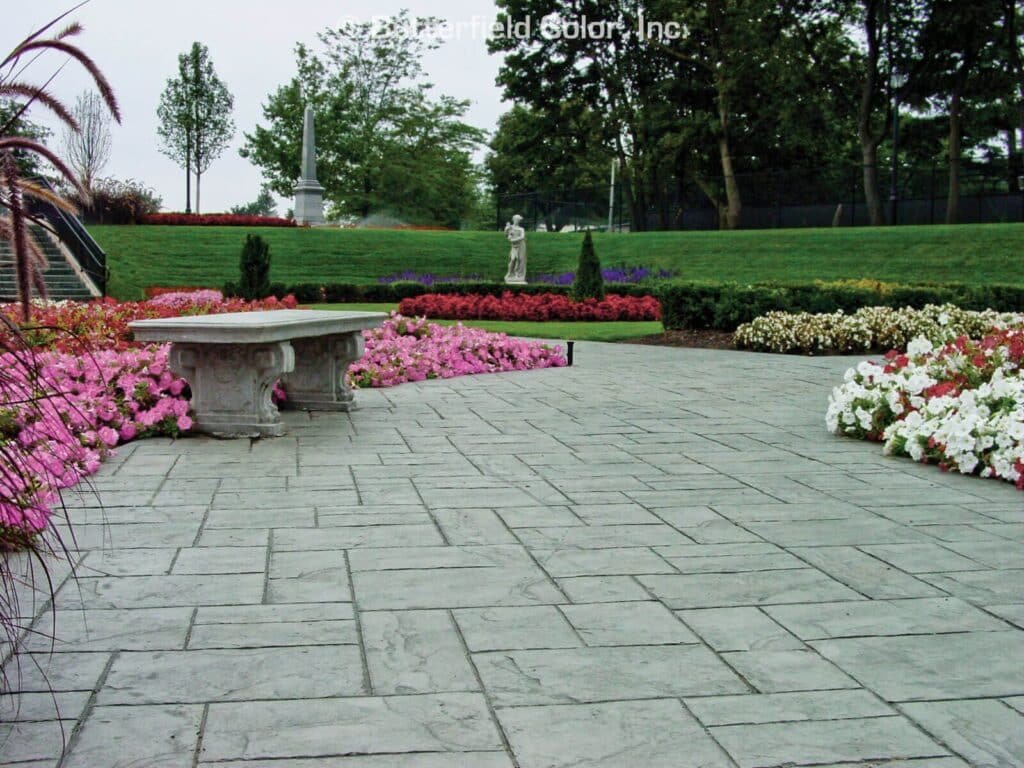
Seamless skins impart a natural stone texture without the deep grout lines of a pattern stamp. Why it works with heat: Seamless textures are fantastic for snow melting because there are no deep crevices for water to pool in if the system is turned off. It provides a modern, expansive look.
2. Ashlar Slate
This is the “King of Stamps.” It features rectangular and square stones arranged in a random, interlocking pattern. The Aesthetic: It mimics cut stone found in historic estates. It pairs beautifully with brick or siding homes common in Fargo.
3. Borders and Bands
A popular trend is to use a contrasting border. For example, a “London Cobble” border in a charcoal color, framing a main driveway stamped in a seamless texture with a lighter grey tone. The Function: The border acts as a visual guide for drivers and adds a “finished” look that increases curb appeal significantly.
4. Color Choices for North Dakota
Darker colors absorb sunlight, which naturally helps melt snow on sunny days (passive solar gain). Recommendation: We often recommend “Integral Colors” (mixed into the concrete) in shades of slate grey, charcoal, or terracotta. These colors hide road grime and tire marks better than lighter creams or tans.
Part 5: The Installation Process (Step-by-Step)
Installing a heated stamped concrete driveway is a major construction project. Transparency is key, so here is exactly what happens when you hire Solid State Concrete for this job.
Step 1: Demolition and Excavation
We remove your old, cracked driveway. But we don’t just stop there. For a heated driveway, we may need to excavate slightly deeper to accommodate insulation.
Step 2: The Sub-Base & Insulation (Critical Step!)
This is where amateurs fail. You cannot put heating tubes directly on cold ground. The heat will sink into the earth (energy loss).
We install a layer of rigid foam insulation (high-density polystyrene) under the entire driveway. This ensures the heat goes UP into the concrete, not DOWN into the dirt. This maximizes efficiency and lowers your heating bills.
[INSERT IMAGE 5: Process Shot – Photo of the excavation site lined with pink/blue rigid foam insulation boards.]
Step 3: Rebar and Tubing
We install a grid of steel rebar for structural strength. Then, we tie the PEX tubing to the rebar in serpentine loops, spaced about 6 to 9 inches apart. We carefully pressure-test the tubing before we pour to ensure there are no leaks.
Step 4: The Pour
We pour high-strength concrete (4000+ PSI) specifically mixed for North Dakota’s climate. We are careful not to damage the tubing during the pour.
Step 5: Stamping and Texturing
While the concrete is still wet (plastic state), we apply color hardeners and release agents, then press the rubber stamps into the surface. This requires precision timing.
Step 6: Control Joints and Sealing
Once the concrete cures, we saw-cut control joints to manage cracking. Finally, we apply a penetrating sealer that enhances the color and protects the surface from stains.
Step 7: System Hookup
A licensed plumber and electrician will connect your PEX loops to the boiler and the sensor system.
Part 6: Cost vs. Value Analysis
Let’s address the elephant in the room: Cost. A heated stamped concrete driveway is a premium product. It costs significantly more than a standard pour. But is it worth it?
The “Time is Money” Equation: How much is your time worth? If you spend 40 hours a winter shoveling or blowing snow, that is a work-week of your life lost every year. Professional Removal: Hiring a plow service in Fargo costs $500 to $800 per season. Over 10 years, that is $5,000–$8,000 spent on a service that often leaves a layer of hard-pack ice behind.
The Liability Factor: One slip-and-fall lawsuit, or one bad hip fracture on an icy patch, costs far more than a heated driveway. For business owners or homeowners with public sidewalks, the liability reduction alone justifies the cost.
Resale Value In the Fargo real estate market, “Heated Driveway” is a keyword that stops scrollers in their tracks. It signals a luxury, well-maintained home. You will likely recoup a significant portion of the installation cost upon resale.
Part 7: Frequently Asked Questions (FAQ)
Q: Do I have to turn it on manually every time it snows? A: No. The best systems use automated sensors (puck sensors) embedded in the concrete. They detect temperature and moisture. If it’s snowing, the system turns on. When the driveway is dry, it turns off. You don’t have to lift a finger.
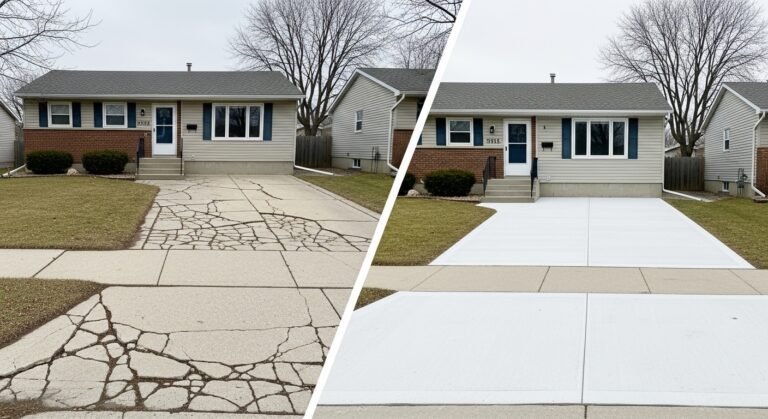
Q: Can I heat my existing driveway? A: No. We cannot retroactively install tubing inside hardened concrete. However, we can tear out your old driveway and pour a new heated one. This is a very common renovation project in Fargo.
Q: Will the stamping wear off? A: Stamped texture is permanent; it is the concrete itself. The color may fade slightly over many years, but this is easily refreshed with a reseal. Because you aren’t scraping it with metal shovel blades or plow trucks, the texture actually stays sharper longer on a heated driveway.
Q: What happens if the power goes out during a blizzard? A: The system will stop heating. However, once power is restored, the system will kick back on. Because concrete has high thermal mass, it may take a few hours to catch up, but it will eventually melt the accumulation.
Q: Is it environmentally friendly? A: It can be. By eliminating the need for rock salt and chloride chemicals, you are preventing runoff that damages our local waterways and kills your lawn/landscaping.
Part 8: Maintenance for Your Heated Stamped Driveway
Even a “magic” driveway needs a little love. Here is how to care for your investment:
Reseal Every 2-3 Years: The sealer protects the color and blocks stain penetration.
Inspect the Boiler: Just like your home furnace, have your glycol boiler checked annually to ensure fluid levels and pressure are correct.
No Heavy Trucks: While residential driveways are strong, avoid parking heavy delivery trucks or dumpsters on the edge of the slab.
Avoid Metal Shovels: Even though you won’t need to shovel often, if you do (perhaps to clear a path for a pet), use a plastic shovel to avoid scratching the decorative sealer.
Conclusion: Upgrade Your Winter
Living in Fargo, ND, requires resilience. But it doesn’t require suffering.
A heated stamped concrete driveway transforms the worst part of winter into a non-event. It gives you back your mornings. It keeps your family safe. And it adds a level of beauty and sophistication to your home that standard grey concrete simply cannot match.
If you are ready to retire your snow shovel and upgrade your home’s exterior, Solid State Concrete is here to help. We are Fargo’s experts in decorative and heated concrete solutions.
Ready to melt the snow? Contact us today, fill out our online form for a free consultation and estimate on your heated driveway project. Let’s make this the last winter you ever worry about the forecast.